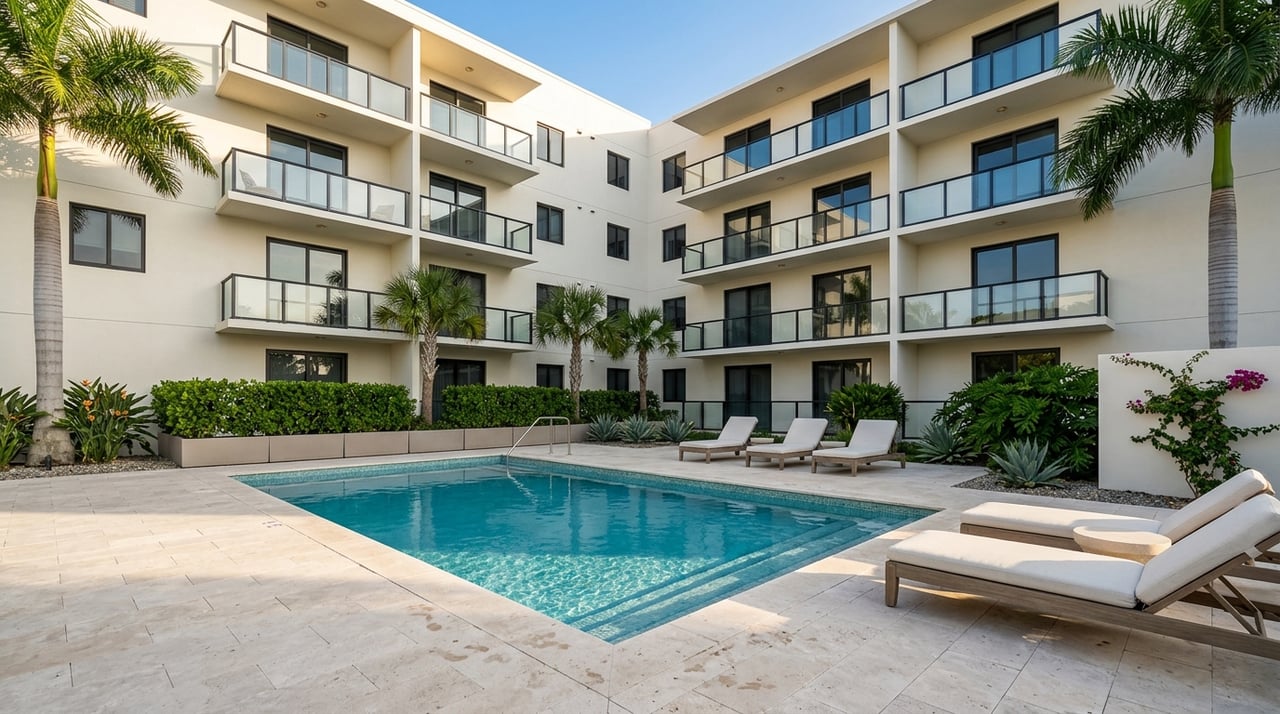
If you have ever looked at two Delray Beach listings just minutes apart and wondered why they feel like completely different lifestyles, you are asking the right question. In Delray Beach, location is not just about being east or west. It is about how close you want to be to the beach, downtown, I-95, parking, and everyday conveniences. When you understand how the city is laid out, you can narrow your search with much more confidence. Let’s dive in.
Start With Delray Beach's Layout
Delray Beach works best when you think of it as a group of distinct submarkets, not one uniform city. The city’s planning documents separate beachside, downtown, mixed-use corridors, and mostly residential inland areas, each with a different feel and function.
In broad terms, most residential land is west of I-95, while commercial and mixed-use nodes cluster along Military Trail and Congress Avenue. Downtown and the beach create a more walkable, activity-focused lifestyle, while many inland areas lean more toward house-oriented living patterns.
Choose the Lifestyle You Want First
Before you compare square footage or finishes, decide how you want your day-to-day life to feel. In Delray Beach, a few blocks can change your routine in a big way.
If your priority is ocean access and a resort-style setting, beachside areas may be the best fit. If you want dining, events, and a more walkable environment, downtown may suit you better. If you want a more residential pattern with different housing forms and access to major roads, inland locations may make more sense.
Beachside Delray Beach
The beach end of Delray Beach is its own distinct district. The downtown master plan places the Beach District at the end of Atlantic Avenue, between the Intracoastal Waterway and the Atlantic Ocean.
This area offers direct access to Delray Beach’s coastal setting, along with two public beaches within city limits: the Municipal Beach at Atlantic Avenue and Atlantic Dunes Park. The city also notes that many beach entrances include showers, bicycle and towel racks, and drinking fountains, with ADA accommodations at the main beach access at Atlantic and A1A and at Atlantic Dunes Park.
If you are considering this part of Delray Beach, parking should be part of your decision early. Beach parking is separate from downtown parking, and the city’s annual beach parking permit covers certain lots but not all beachside parking areas.
Another key factor is flood review. The city says Delray Beach’s coastal geography makes it vulnerable to tidal flooding, storm surge, and heavy rainfall, so east-of-Intracoastal and near-coast buyers should review flood maps and ask the right property-specific questions.
Who Beachside May Fit Best
Beachside living may appeal to you if you want:
- Quick access to the ocean
- A coastal setting near Atlantic Avenue
- A second-home or seasonal-use lifestyle
- Condo or waterfront options tied closely to beach access
Beachside may require closer review of:
- Flood exposure
- Parking details
- Building or property access patterns
- Traffic and seasonal activity levels
Downtown Delray Beach
Downtown Delray Beach centers on the city’s Central Business District, which is intended to preserve downtown’s historic and cultural character while supporting vitality and growth. The city identifies several CBD subdistricts, including the Beach, Central Core, Railroad Corridor, South Pairs Neighborhood, and West Atlantic Neighborhood.
For many buyers, downtown means proximity to restaurants, shops, events, and a more walkable environment. The city’s planning framework supports higher-density residential development in the Central Core to encourage compact, pedestrian-oriented growth.
If you want to live with fewer car trips, downtown has a practical advantage. The city’s free Delray Beach Freebee service operates on-demand daily in historic downtown and most locations east of I-95 to A1A, between Gulfstream Boulevard and SW 10th Street.
Parking is still a major location variable here. The city offers public parking in garages, lots, and on-street spaces, and it also has resident-focused permit programs, including options for downtown residents who do not have resident parking in their housing unit.
Questions To Ask About Downtown Living
If downtown is on your shortlist, look beyond the photos and ask:
- Does the property include deeded, assigned, or on-site parking?
- Are there resident permit options that apply to this address?
- How close are you to the Central Core versus quieter nearby blocks?
- Will you actually use walkability and on-demand local transportation?
These questions matter because convenience downtown often depends on details that are easy to miss in a listing.
Inland Delray Beach Locations
A large majority of Delray Beach’s residential land is west of I-95. These inland areas are supported by commercial and mixed-use nodes along Military Trail and Congress Avenue, which can shape how convenient daily errands and commuting feel.
From a housing-pattern standpoint, the city’s land-use framework helps explain what you may see on the ground. Low-density residential areas are primarily reserved for detached single-family housing up to five dwelling units per acre, while medium-density areas can include a broader mix of attached and detached single-family homes and multifamily housing.
That does not mean every inland neighborhood feels the same. Some areas are more established, while others are still seeing public improvements and infrastructure work.
For example, the city’s NW Neighborhood Improvement Project covers the area bordered by Atlantic Avenue, I-95, Lake Ida Road, and Swinton Avenue, with work that includes drainage, utilities, lighting, pavement rehabilitation, traffic calming, and pedestrian and bicycle improvements. That tells you some inland pockets are evolving block by block.
Osceola Park offers another useful example of an established interior neighborhood near downtown. The city’s redevelopment plan describes it as immediately south of the CBD and about 90% single-family, with low-rise duplexes and triplexes interspersed through the area.
Inland Areas May Fit You If
You may prefer an inland Delray Beach location if you want:
- A more residential day-to-day environment
- Greater focus on house-oriented living patterns
- Easier access to I-95 or Congress Avenue corridors
- A wider range of housing forms depending on the area
Check Access, Not Just Address
In Delray Beach, the street address alone does not tell the whole story. You should check distance to the beach, the Intracoastal Waterway, A1A, Atlantic Avenue, and I-95 together.
That is because the lifestyle can shift quickly over a short distance. A home that looks close on a map may function very differently depending on whether your priority is the ocean, downtown activity, commuting, or a quieter residential setting.
One of the smartest ways to choose your ideal location is to rank these access points in order of importance. Once you know your top two or three, it becomes much easier to eliminate areas that do not match your routine.
Consider Your Commute and Travel Patterns
If you commute within South Florida or expect frequent regional travel, transportation access should be part of your search from the start. The Delray Beach Tri-Rail station is located at 345 S Congress Avenue near I-95 exit 52B, and it offers free commuter parking and Palm Tran connections.
Tri-Rail serves Palm Beach, Broward, and Miami-Dade counties, which can be a meaningful advantage if you want a location with regional reach. Even if you work remotely, access to major roads or rail can still affect convenience for airport runs, visiting family, or second-home use.
Review Flood and Parking Early
Two of the most important location filters in Delray Beach are flood review and parking. They are not as exciting as kitchens or views, but they can shape your long-term comfort with a property.
The city directs buyers to review flood-risk products and consult city staff for FIRM maps, special flood hazard area checks, elevation certificates, and flood-insurance questions. This step is especially important near the coast and east of the Intracoastal.
Parking deserves the same level of attention. Because downtown and beach parking use different permit systems, you should verify listing remarks, HOA documents, and whether parking is deeded, assigned, or dependent on permits before moving forward.
A Simple Way To Narrow Your Search
If Delray Beach feels overwhelming at first, use this simple three-step filter:
Pick your lifestyle anchor Decide whether beach access, downtown walkability, or inland residential living matters most.
Set your access priorities Rank how important it is to be near Atlantic Avenue, I-95, A1A, the Intracoastal, or Tri-Rail.
Verify the practical details Check flood considerations, parking setup, and whether the surrounding area supports how you actually want to live.
This approach helps you move beyond broad labels and focus on the part of Delray Beach that truly fits your goals.
Choosing the right Delray Beach location is really about aligning your home with your lifestyle, your routines, and your long-term plans. When you look at beachside, downtown, and inland options through that lens, the market becomes much easier to navigate and much more strategic.
If you want guidance comparing Delray Beach locations with clarity and confidence, Deborah Carr can help you evaluate the tradeoffs, ask the right questions, and find the fit that makes sense for your next move.
FAQs
What is the main difference between beachside and inland Delray Beach locations?
- Beachside locations are tied more closely to ocean access and a coastal setting, while many inland locations offer more house-oriented residential patterns and different access to major roads and commercial corridors.
What should buyers check before choosing a downtown Delray Beach property?
- Buyers should confirm parking arrangements, review any resident permit options, and consider how close the property is to walkable downtown activity and on-demand local transportation.
What transit options matter when choosing a Delray Beach location?
- The Delray Beach Freebee service can support car-light living in historic downtown and many areas east of I-95, while the Delray Beach Tri-Rail station on South Congress Avenue can be important for regional commuting.
What flood questions matter when buying near the Delray Beach coast?
- Buyers should review flood-risk information, check whether the property is in a special flood hazard area, and ask for property-specific documents such as elevation certificates when relevant.
Why is parking such an important part of choosing a Delray Beach location?
- Parking matters because downtown and beach areas use different permit systems, and convenience can depend on whether a property includes deeded, assigned, on-site, or permit-based parking.